
How to Mix and Use Dish Wash Concentrate Powder for 10L of Kitchen Gel
 dish wash concentrate powder is a concentrated cleaner you can turn into 10 litres of kitchen gel by following a clear powder-to-water ratio and safe mixing steps. Mix in warm water, control viscosity, and check pH to make an effective, economical dishwashing gel for home or commercial kitchens.
Quick answer: How to mix dish wash concentrate powder to make 10L of kitchen gel
Start with the manufacturer's recommended powder-to-water ratio; a common range is 50–60 grams per litre for medium-strength gel, but exact amounts vary by product. For a 10L batch, that typically means dissolving 500–600 grams of powder into warm water. Add the powder slowly while stirring to avoid clumps and allow 10–20 minutes for full dissolution.
Typical mixing order is: measure warm water into a clean container, begin gentle agitation, slowly sprinkle the powder while stirring, allow the surfactants to hydrate, then add any separate thickeners or pH adjusters if required. Wear gloves, ensure good ventilation, and keep children and food away from the mixing area. Always confirm final viscosity and perform a small use test before large-scale deployment.
Key criteria to check before you mix: what to look for on the concentrate powder
First, read the label for the recommended powder-to-water ratio and any specific temperature guidance. Solubility depends on formulation: some powders dissolve best in warm (30–50°C) water, while others are optimized for ambient mixing. Look for explicit notes on whether the mix includes thickeners or if a separate gelling agent is needed; that changes how you sequence additions and how long you must mix.
Next check surfactant concentration and pH information. A higher surfactant level gives stronger grease-cutting at lower usage rates, but it can affect foaming and feel. If the label lists pH or suggests pH adjusters/buffers, plan to test and correct the final pH to match skin-safe ranges or dispenser requirements. Also confirm biodegradability, certifications, and safety handling instructions to meet regulatory or commercial kitchen standards.
Finally, verify compatibility with dispensers and equipment. Some concentrated gels require specific viscosities to work in pump dispensers or dishwashing machines. Look for statements about corrosion risk on metals or effects on glassware. For commercial use, traceability details like batch numbers and shelf-life recommendations are valuable for inventory control and safety audits.
Choosing the right batch size and storage for 10L kitchen gel
Decide whether to mix a single 10L batch or multiple smaller batches based on turnover and storage conditions. A single 10L batch reduces measured-errors and waste for busy kitchens, while smaller batches (2–5L) minimize risk of degradation if usage is slow. Scale powder amounts linearly: if the label directs 50 g/L, a 10L batch requires 500 g of powder.
Choose containers that are food-safe, chemically resistant, and sealable—HDPE drums or wide-mouth plastic jerrycans are common. Store in a cool, dry place away from direct sunlight and frost; ideal storage is 10–30°C. Clearly label containers with product name, batch date, and dilution ratio for traceability and compliant handling in commercial settings.
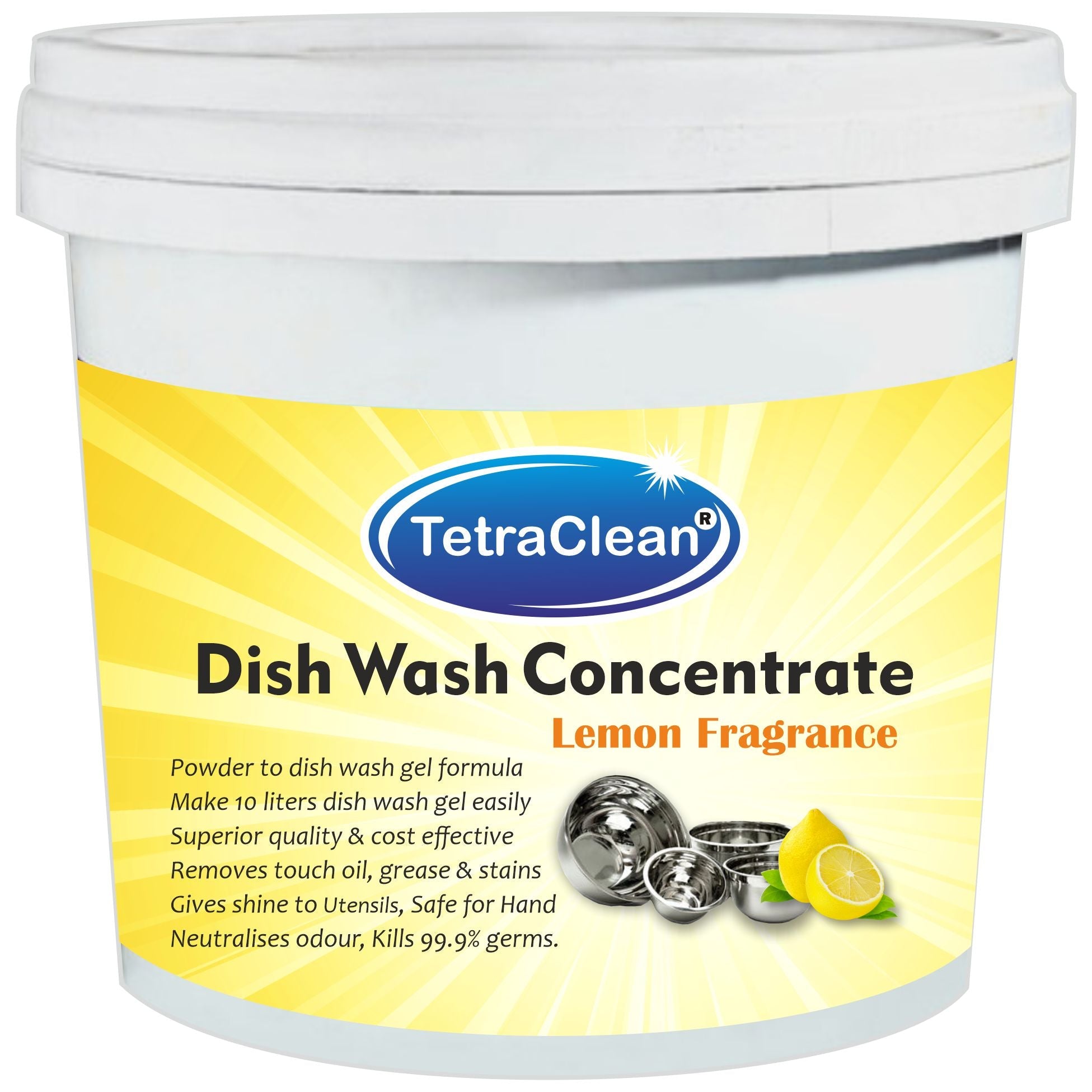
Product recommendation:For a reliable concentrate that makes up to 10 litres of gel, consider TetraClean Dish Wash Concentrate Powder 500g | Makes 10 Litres Dishwashing Gel | Lemon Fragrance | Removes Tough Oil, Grease & Stains | Powerful Kitchen Utensil Cleaner, which is formulated to remove stubborn oil and leave a refreshing lemon scent.
Record expected shelf life after mixing—many gels remain stable for weeks to months depending on preservatives and storage conditions. For commercial kitchens, rotate stock on a first-in, first-out basis and keep a small usage log to track performance and any changes in clarity, odor, or separation.
Common mistakes to avoid when making dish wash gel from concentrate powder
Avoid adding powder too quickly into still water; this causes clumping and uneven dissolution. Instead, sprinkle powder gradually while stirring and allow time for surfactants to hydrate. Using water that’s too hot can degrade fragrance or some actives, while water that’s too cold may prevent complete dissolution—follow the product’s solubility guidance and test small batches first.
Do not skip pH checks or neutralization steps if the label recommends them. Incorrect pH can reduce cleaning performance, irritate skin, or damage metalware. Use proper mixing equipment—stirring with a paddle or low-speed mixer prevents air entrapment and ensures uniform viscosity. Also avoid cross-contamination with incompatible chemicals like bleaches or acids which can create hazardous reactions or reduce effectiveness.
Improper storage is another frequent error: leaving an opened 10L container unsealed or exposed to heat can cause separation, microbial growth, or fragrance loss. Label containers clearly, keep them sealed, and use within the manufacturer-recommended shelf life to maintain consistent cleaning strength.
How much dish wash concentrate powder do I need to make 10 liters of gel?
You typically need the product's stated ratio; many concentrates use around 50 g per litre, so a 10L batch would need about 500 g. Always check the specific label for the exact powder-to-water ratio because formulations vary and follow the manufacturer’s directions for best performance and safety.
What water temperature is best for dissolving dish wash concentrate powder?
The best temperature is usually warm but not hot—around 30–50°C—because warmth speeds dissolution without degrading fragrances or actives. If the product specifies a range, follow that. If unknown, start with lukewarm water and adjust based on how quickly the powder hydrates and the clarity of the solution.
Can I convert a powder concentrate formula into a thicker gel without changing surfactant strength?
Yes, you can often increase viscosity by adding approved thickeners or gelling agents while keeping the surfactant concentration steady, but follow manufacturer guidance to avoid instability. Add thickeners gradually with good agitation, and test for foaming, dispensing behavior, and skin feel to ensure the modified gel performs as intended.
How long does homemade 10L dish wash gel last in storage?
Shelf life varies by formulation and preservatives; many diluted gels remain stable for weeks to months when stored sealed in cool, dark conditions. For commercial use, follow label guidance, observe any changes in odor or phase separation, and use a first-in, first-out system to ensure freshness and consistency.
Key takeaway: follow the product’s powder-to-water ratio, mix carefully with proper safety measures, and store the finished gel in suitable containers for reliable results. If you need a dependable concentrate designed to make up to 10L, review the product label and test a small batch before scaling to full production.